
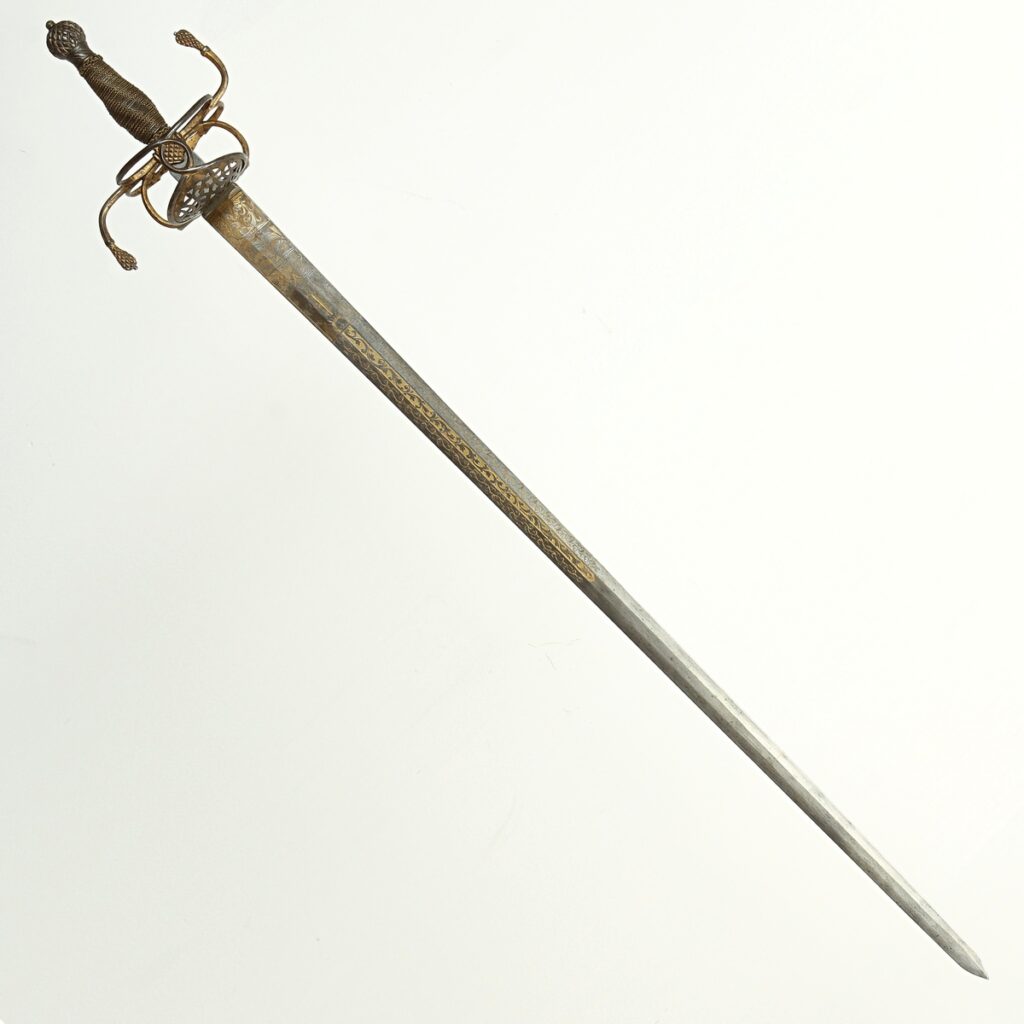
03 Sword, Central Europe, 2nd half of 16th century
Fotogalerie
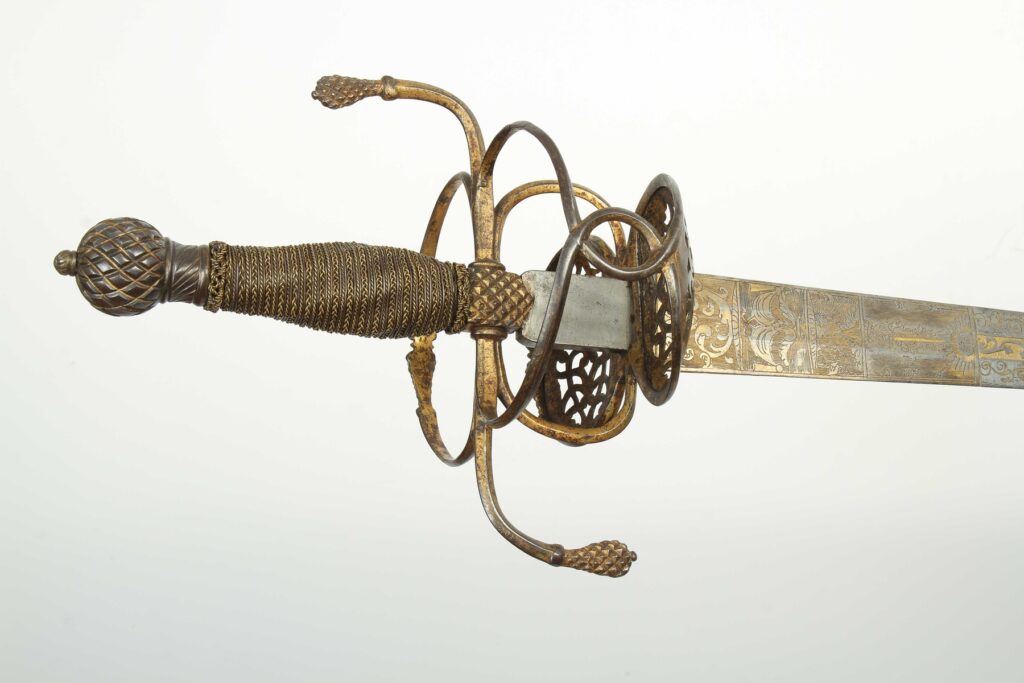
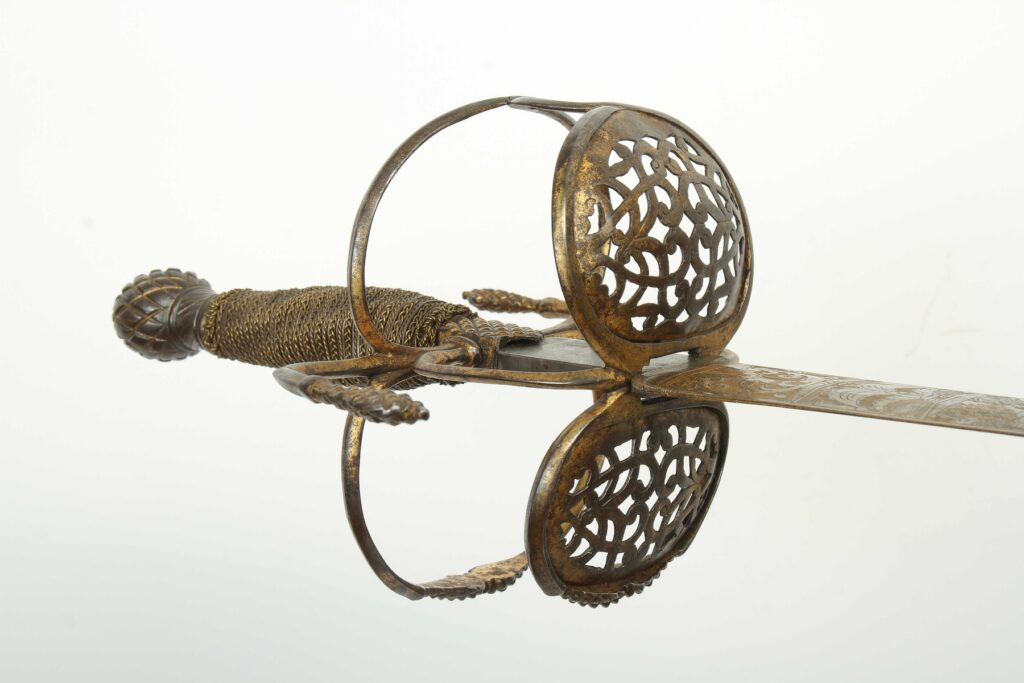
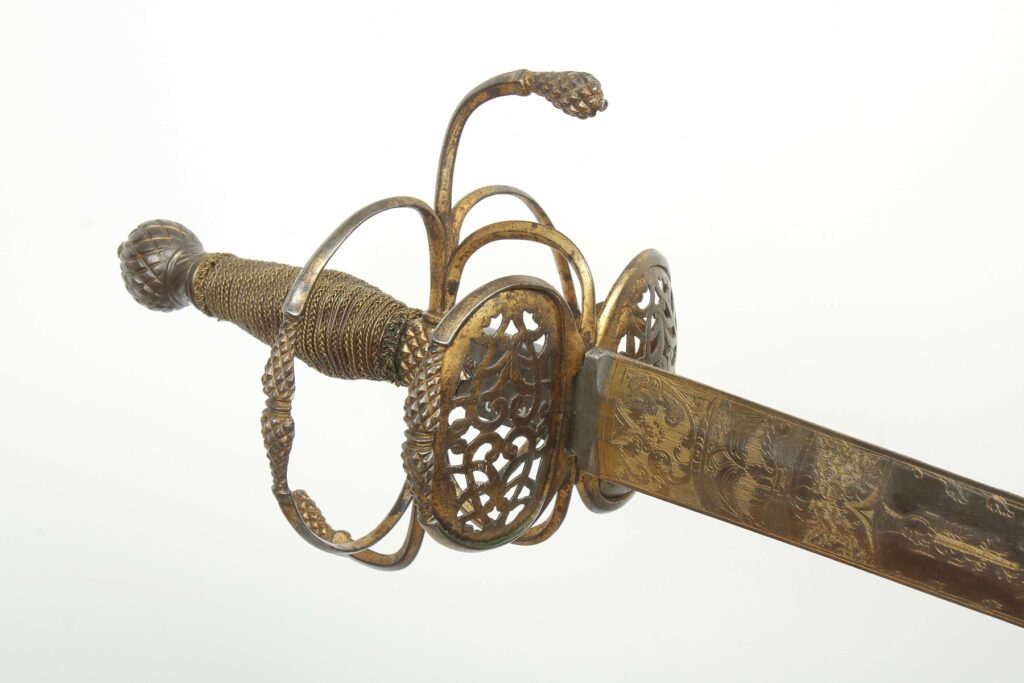
At the same time, as the guards of cavalry swords changed and developed, the grip started to get shorter, often spirally grooved and wrapped with braided wires. This gave rise to the classic Renaissance sword where the guards were given new side-arms over time, attaching to or extending from a knuckle-gurad forming the front arm of the guard and curling towards the pommel of the hilt. This gave rise to the intricate basket-hilted swords, where it achieved a particular richness of form and definitely replaced the protective iron glove. This richness and intricacy of shape can be traced from the mid-16th century to the mid-17th century when cavalry swords were provided with baskets of more conservative shapes and baskets of a uniform type appeared in the individual regiments of standing armies.
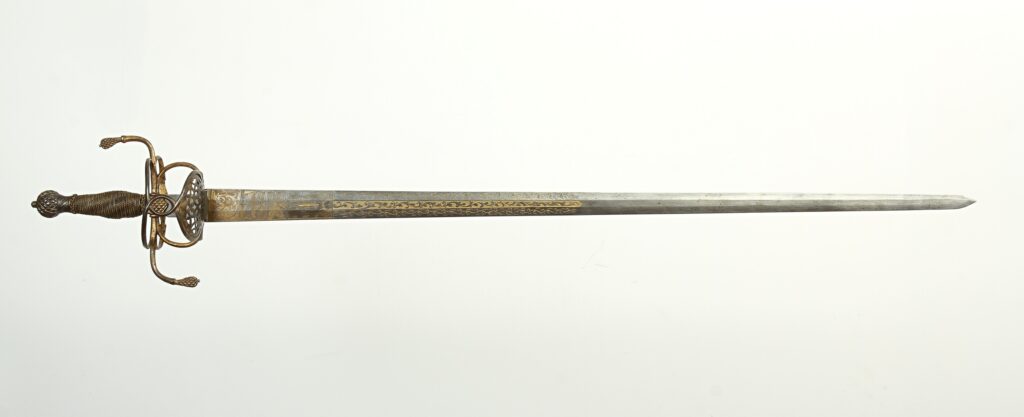
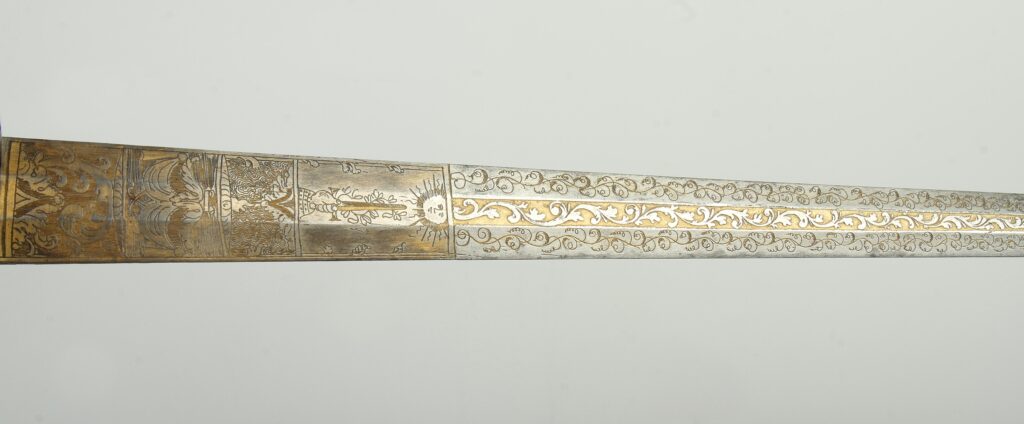
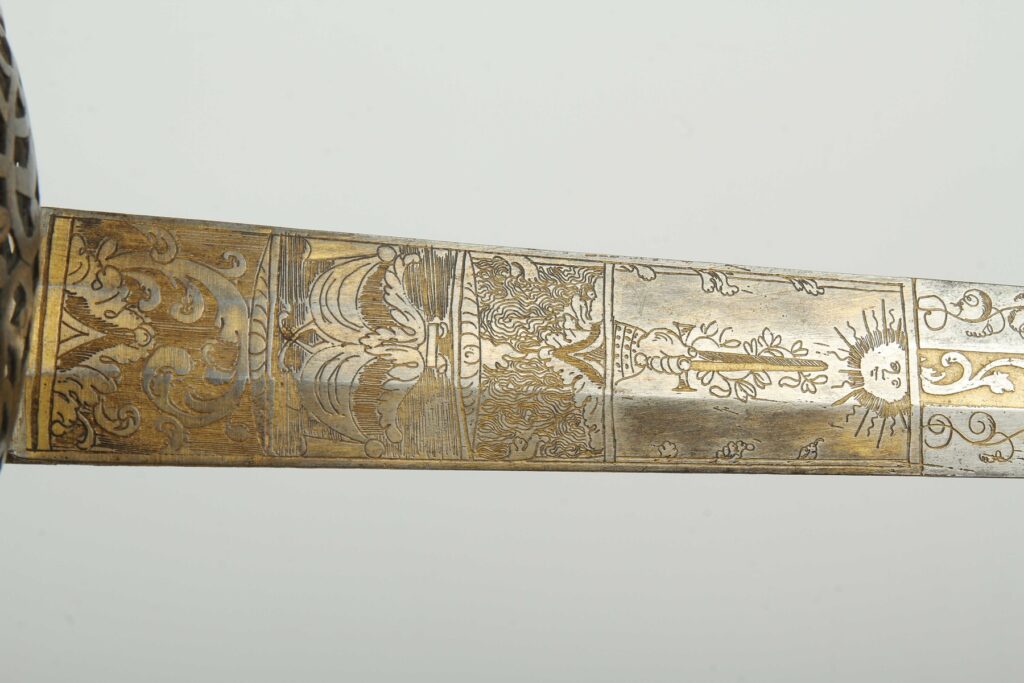
The blade of this magnificent sword is straight, double-edged, low hexagonal in cross-section, with a central point. One half of the blade is decorated on both sides with gilt engraving and chased ornamentation on gilded ground. Individual fields below the guard depict acanthus rinceau, a fountain, a shining sun and a hand with a sword. The wooden grip is spirally wrapped with coiled wire of yellow metal. The iron parts are gilded in fire. The spherical pommel is decorated with a rouletted embossed cut and finished with flattened grapes. The S-shaped guard is connected by lower and lateral side-arms to the lower counter-guard, decorated with incised ornamentation. The whole hilt bears unevenly preserved traces of gilding.
Length 1135 mm, blade length 917 mm, blade width 40 mm, weight 980 mm.
Aktuálně
Stručně o 2. čs. střeleckém pluku
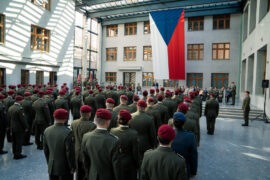
V Armádním muzeu na Žižkově se při slavnostním ceremoniálu měnilo velení českých speciálních sil
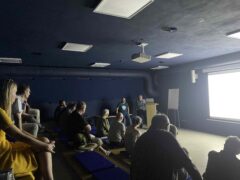
Přijďte tento čtvrtek do Armádního muzea Žižkov na komentované promítání. Tentokrát se zaměří na nešvary v armádě
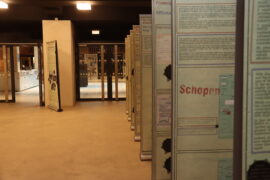
V Armádním muzeu Žižkov můžete vidět novou panelovou výstavu. Představuje administrativu povinné vojenské služby v českých zemích

Bitva u Chlumce – triumf knížete Soběslava před 900 lety – 18. 2. 1126






Vojenský historický ústav Praha
U Památníku 2, 130 05, Praha 3
muzeum@vhu.cz
Ředitelství
Ředitel VHÚ Praha
brigádní generál Mgr. Aleš Knížek
Sekretariát ředitele
+420 973 204 900
ID DS
hjyaavk
Správní rada pro vyřízení vývozních povolení, darů či výkupů
+420 973 204 903
Správní rada pro vyřízení zápůjček
+420 973 204 900
Veškeré informace týkající se zápůjček exponátů na výstavy a další akce, formuláře pro vývoz milirarií, práva k fotografiím a filmovým sbírkám atd. naleznete v samostatné rubrice Služby veřejnosti.
Knihovna VHÚ
Pracoviště Rooseveltova
+420 973 215 544
Vedoucí knihovny VHÚ
+420 973 215 938
knihovna@vhu.cz
Časopis Historie a vojenství
Šéfredaktor
David Pazdera
+420 973 204 941
Armádní muzeum Žižkov
U Památníku 2
Praha 3 - Žižkov
+420 973 204 924
Letecké muzeum Kbely
Mladoboleslavská ul.
Praha 9 - Kbely
+420 973 207 500
Vojenské Technické Muzeum Lešany u Týnce nad Sázavou
Lešany u Týnce nad Sázavou
pošta Krhanice, 257 42
+420 973 296 161

